
How I Study Scripture Step-by-Step

Studying God’s Word doesn’t have to be complicated — in fact, I find the simpler my process is, the more I stay consistent and truly enjoy it. Here’s the method I use almost every day to dig deeper into Scripture and let it speak to my heart.
1. Write the verse down and compare translations
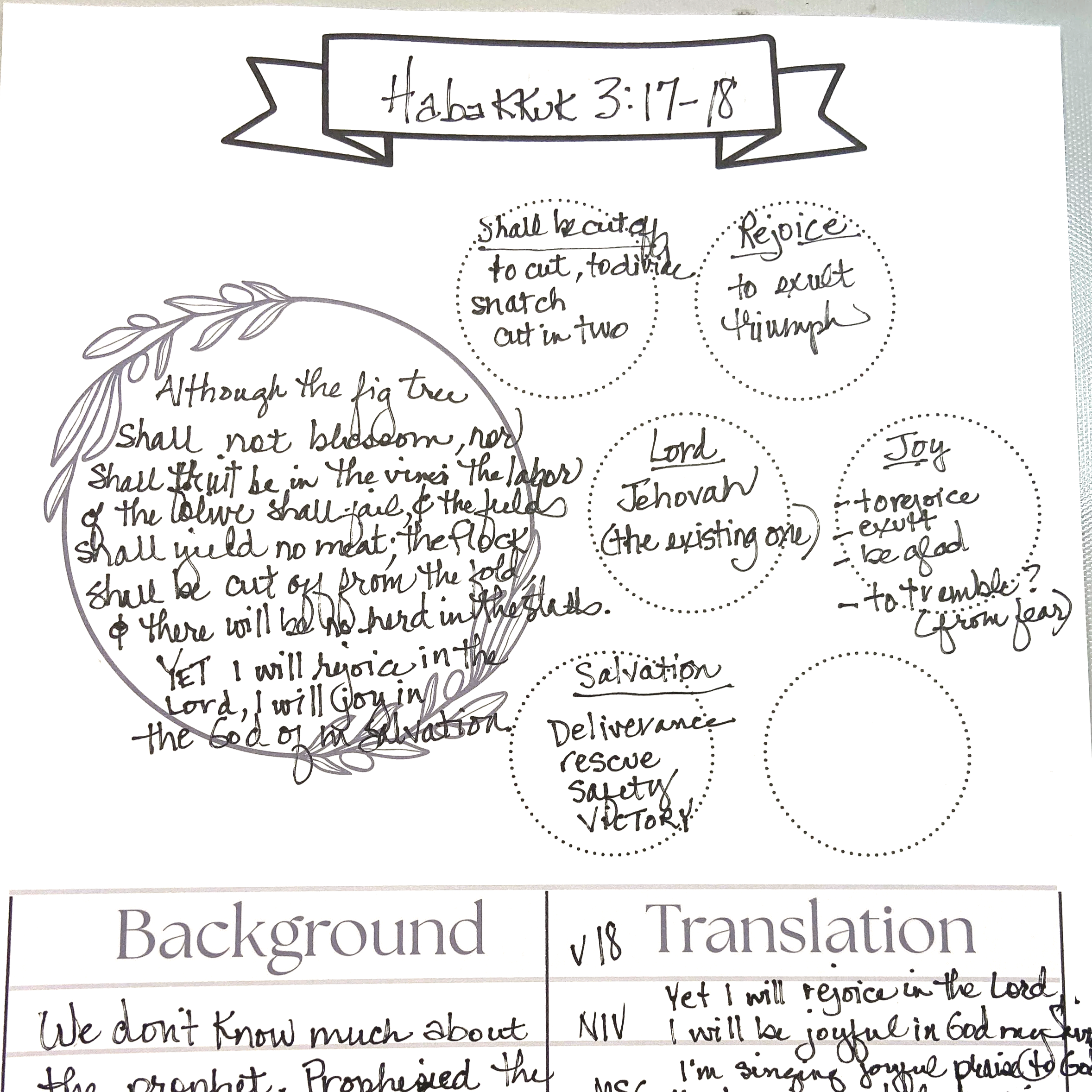
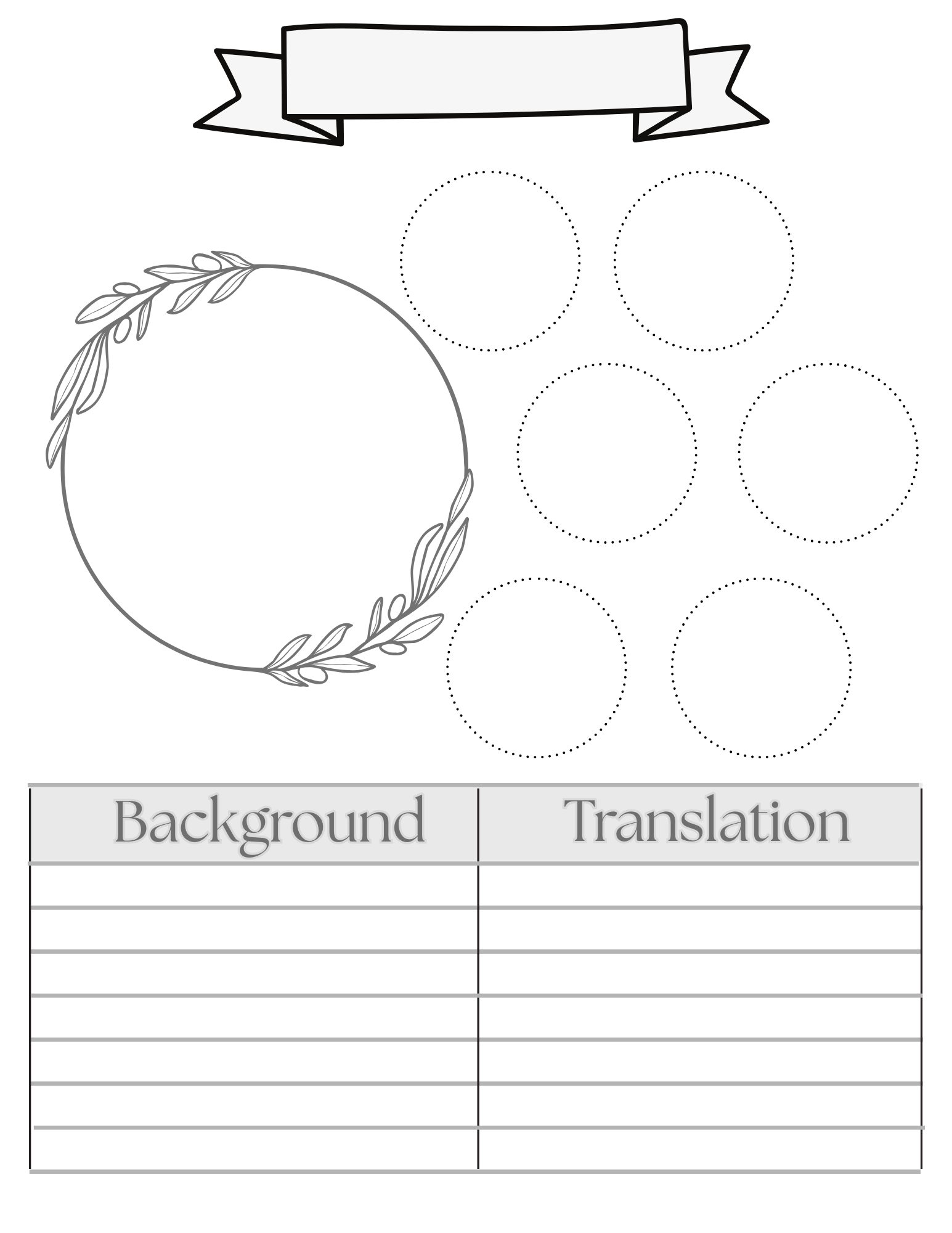
I start by writing the verse out by hand using my Scripture Verse Mapping page. (Download your FREE copy)
There’s something about putting pen to paper that makes the words sink in. Then, I read the verse in different Bible translations — sometimes the NIV, ESV, NKJV, NLT, or even The Message. I look for the one that really speaks to me or brings a fresh perspective.
Yesterday, I was verse mapping Habakkuk 3:17–18, and I loved how The Message really illustrated the joy we should feel when worshiping the Lord:
“I’m singing joyful praise to God. I’m turning cartwheels of joy to my Savior God.”


2. Go deeper with word definitions
Next, I head to Blue Letter Bible. Once I’ve found the verse, I click on the Tools tab and then select Interlinear/Reverse.
This gives me access to the original Hebrew or Greek words, along with their definitions.
I write down the meanings of any words that stand out to me.
Many times, these definitions open up a whole new layer of understanding!

3. Learn from trusted commentaries
After that, I click on the Commentary tab and read insights from a few authors. My personal favorites are David Guzik and John Trapp. Guzik offers clear, practical explanations, while Trapp’s commentary is rich with historical context and poetic phrasing. Reading these helps me see how others have understood and applied the verse throughout history.
4. Learn the background of the passage
I also like to learn who wrote the scripture and why, and when it was written. Understanding the historical setting and the author’s purpose adds even more meaning and helps me see how that truth applied then — and how it still applies today.
By the time I’m done, I don’t just know the verse — I’ve experienced it. This simple method helps me slow down, notice details I would have otherwise missed, and truly let God’s Word take root in my heart.


5. Compare even more translations
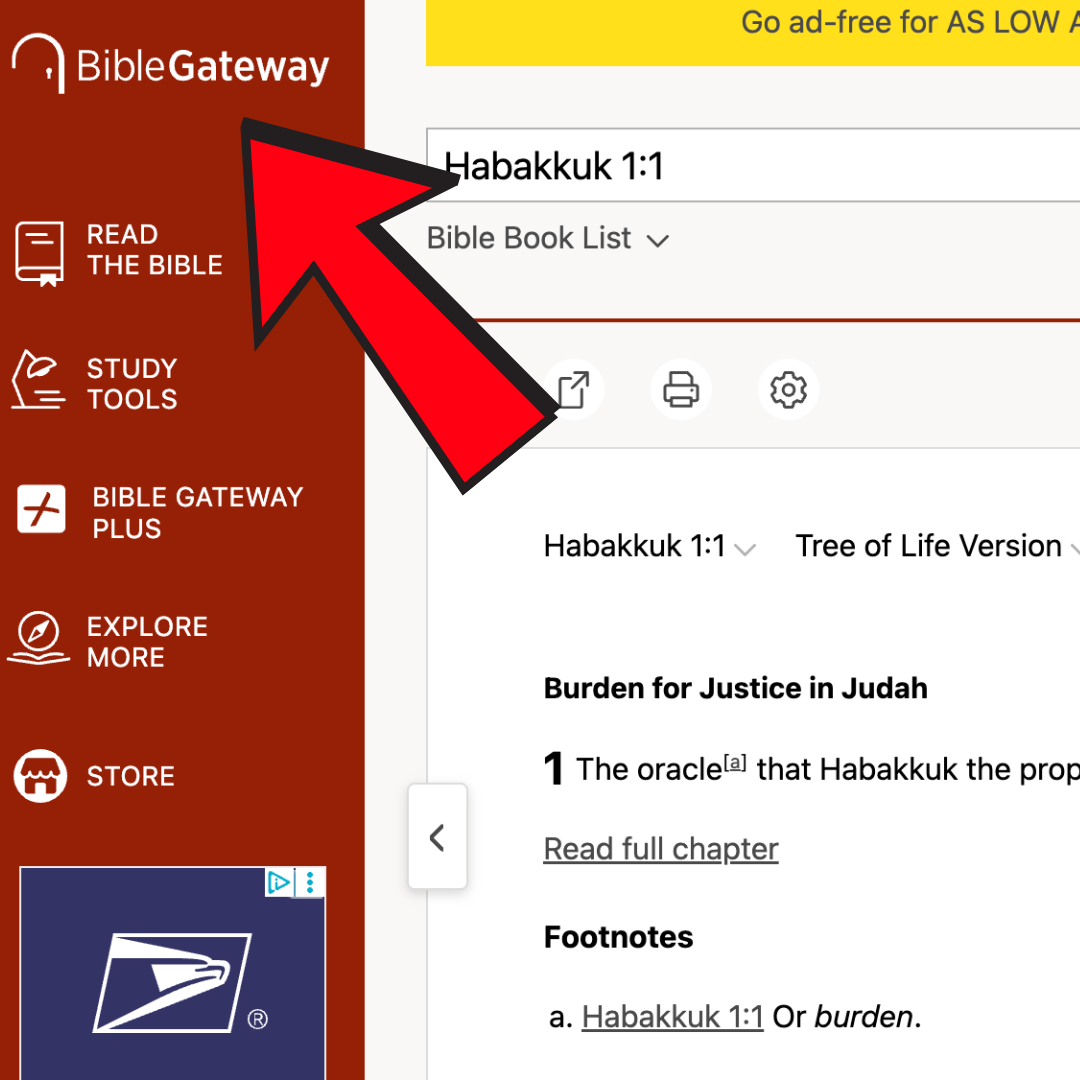
Another website I like to use is BibleGateway.com. On this site, you can type in the verse and select the version of the Bible you want to read. Then, click on “Other Translations” to instantly see how that verse is worded in dozens of translations. This is a quick and powerful way to see the richness of the text from different perspectives.
If you’ve ever felt unsure where to start with Bible study, I encourage you to give this method a try. You don’t have to be a theologian or have hours to spend — just take one verse and walk through these simple steps. Let God’s Word speak to you personally. The more you dig in, the more you’ll discover that Scripture is alive, relevant, and deeply personal. My prayer is that, as you study, you’ll not only understand God’s Word more clearly but also fall more in love with the Author Himself.