
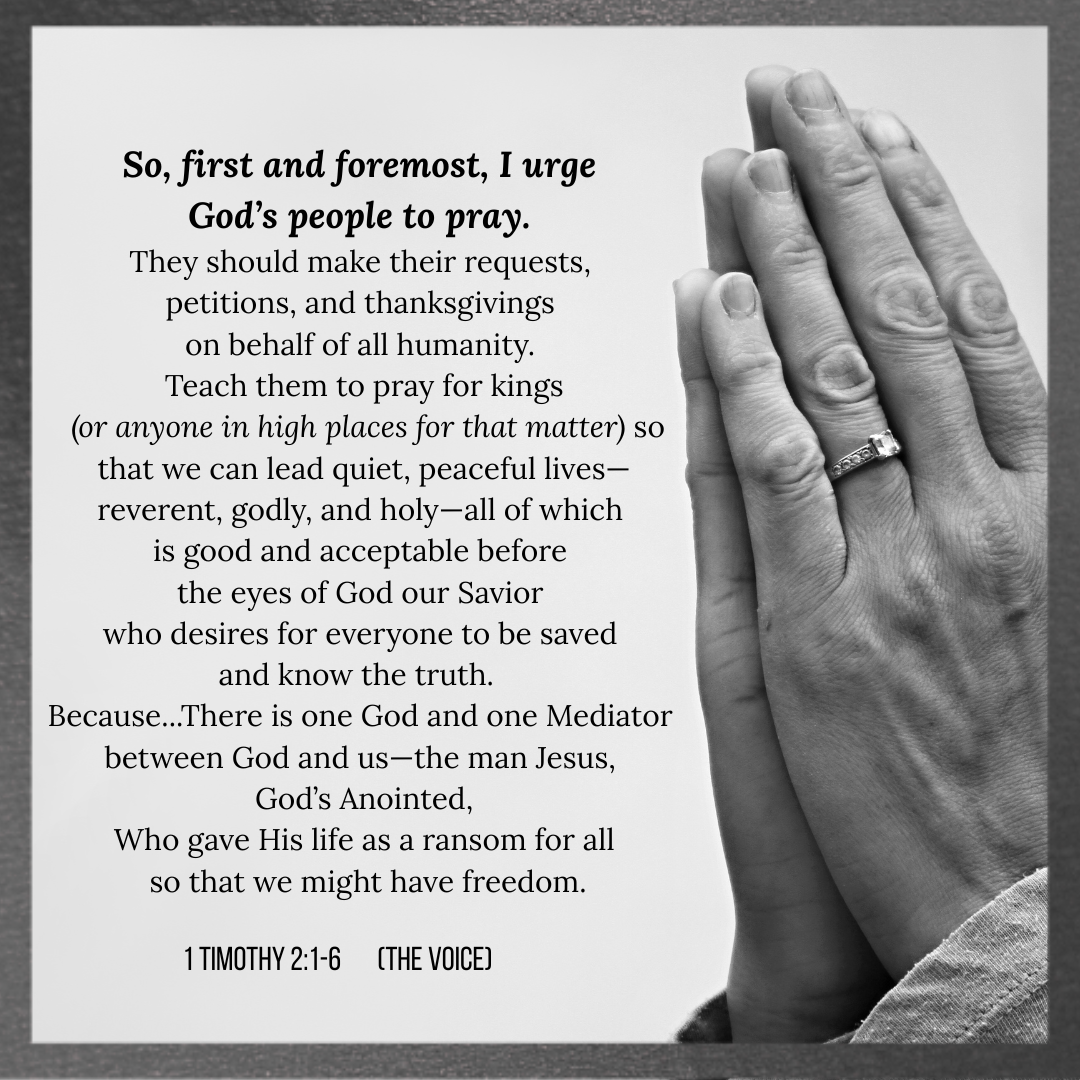
1 Timothy 2:1-6 (The Voice)
When I was a child, I used to think the prayer time in church was the boring part. My eyes would close, but my mind would wander—what was for lunch? What was everyone around me doing? It felt like a lot of standing, listening, and waiting. I didn’t understand why prayer mattered so much in worship.
But in 1 Timothy 2:1–6, Paul tells us that prayer is not just a routine; it’s a priority. And not only that—he urges us to pray for everyone. Not just our family, not just our friends, and not just the people we like. Everyone. Even our leaders, even those we may disagree with, and even our enemies.
Who Was Timothy?
This passage is part of the first of two letters Paul wrote to his beloved son in the faith, Timothy. Timothy’s very name means “one who honors God.” His mother, Eunice, and grandmother, Lois, were devout Jews who came to faith in Jesus Christ. They taught him the Scriptures from childhood (2 Timothy 1:5).
Timothy was from Lystra, in the Roman province of Galatia (modern-day Turkey). Paul saw great potential in this young man and chose him as a disciple. From that moment on, Timothy traveled with Paul, helping plant churches, spreading the gospel, and serving as Paul’s trusted representative when Paul himself was imprisoned.
So when Paul wrote to Timothy, he was not just sending instructions; he was passing down the heart of a mentor to a beloved son.
Paul’s Instructions on Worship
In 1 Timothy chapter 2, the heading in my Bible reads “Instructions on Worship.”
What was Paul’s first instruction for worship in the early church? Was it about music style—“only organ hymns allowed”? Or about the preacher’s delivery—“your sermons must always be motivational”?
No. Paul said, “I urge, then, first of all, that petitions, prayers, intercession and thanksgiving be made for everyone—for kings and all those in authority” (1 Timothy 2:1–2).
The priority in worship was prayer. Prayer for all people. Prayer for rulers and leaders. Prayer with thanksgiving.
Pray for Everyone
Paul’s encouragement is not only for the church in Ephesus but for us today. It’s easy to pray for ourselves. It’s natural to pray for those we love. But Paul stretches us: pray for everyone.
That sounds overwhelming. How can we possibly pray for billions of people? Paul’s point isn’t that we have to name each person individually, but that our prayers should reflect the heart of God. God desires all people to be saved and come to the knowledge of the truth (1 Timothy 2:4).
This means we exclude no one. From neighbors to strangers, from family members to political leaders, from people we admire to people we struggle with—no one is outside God’s concern, and therefore no one should be outside our prayers.

Why Pray for Leaders?
Paul specifically mentions praying “for kings and all who are in authority.” In his day, this was radical. Roman emperors and officials were often hostile to Christians, persecuting them, and even putting them to death. Yet Paul told believers not to curse their rulers, but to pray for them.
Early Christians were often accused of undermining the state because they confessed Jesus as Lord instead of Caesar. But they showed their loyalty to Christ by being good citizens, obeying laws, and praying for those in authority (see Romans 13:1–7).
Paul knew that praying for leaders wasn’t about political approval—it was about creating space for the gospel. He said we should pray so “that we may live peaceful and quiet lives in all godliness and holiness” (1 Timothy 2:2). Our prayers for government leaders, teachers, pastors, and workplace authorities have an evangelical purpose: that doors would open for the message of Jesus.
This is just as true today. We may disagree with policies. We may struggle with frustration over leadership. But God’s Word tells us: pray for them anyway.
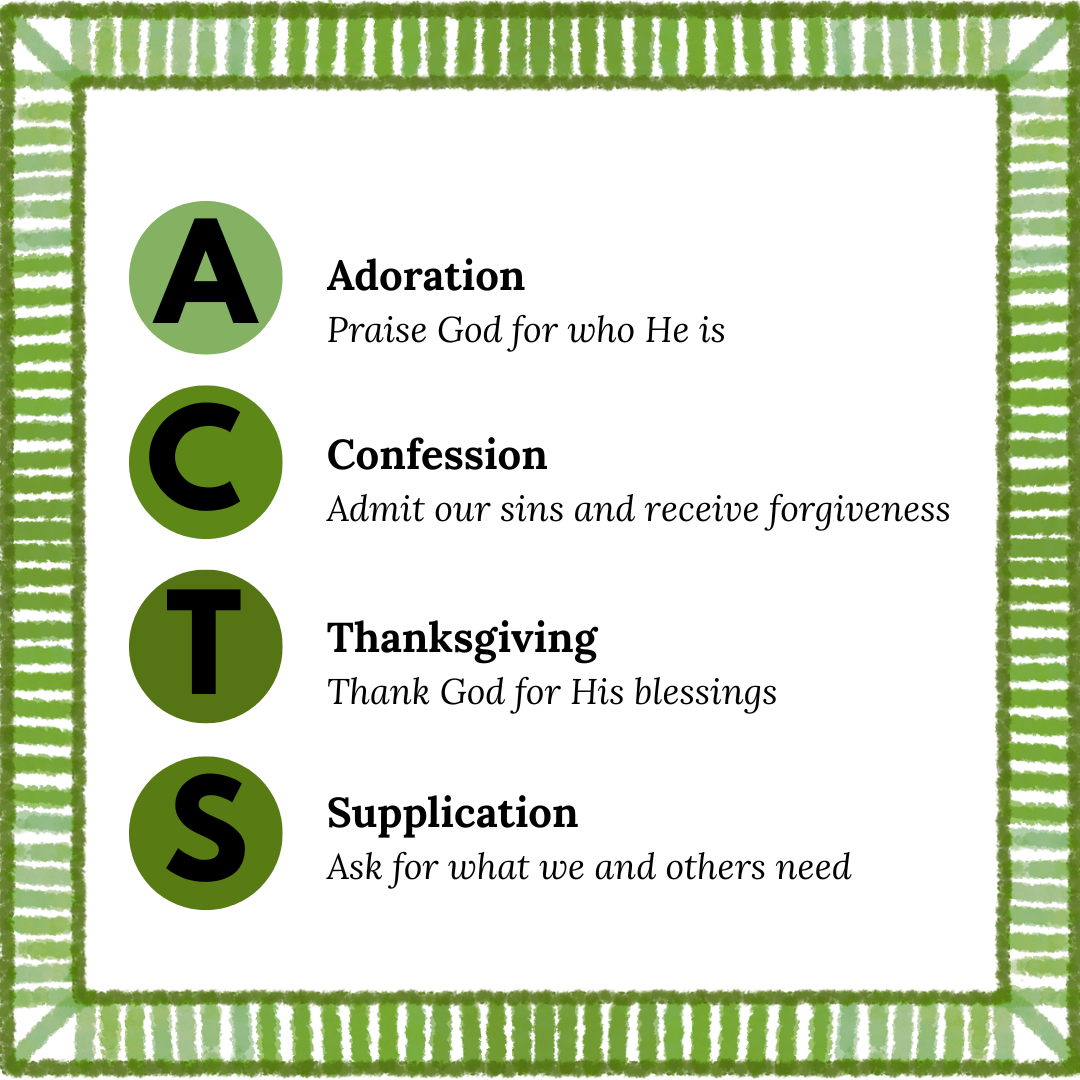
PRAY model - ACTS
How Do We Pray?
Prayer can sometimes feel repetitive or shallow. That’s why it helps to have a guide. Many Christians use simple models to stay focused.
One is the ACTS prayer model:
Adoration – Praise God for who He is.
Confession – Admit our sins and receive forgiveness.
Thanksgiving – Thank God for His blessings.
Supplication – Ask for what we and others need.
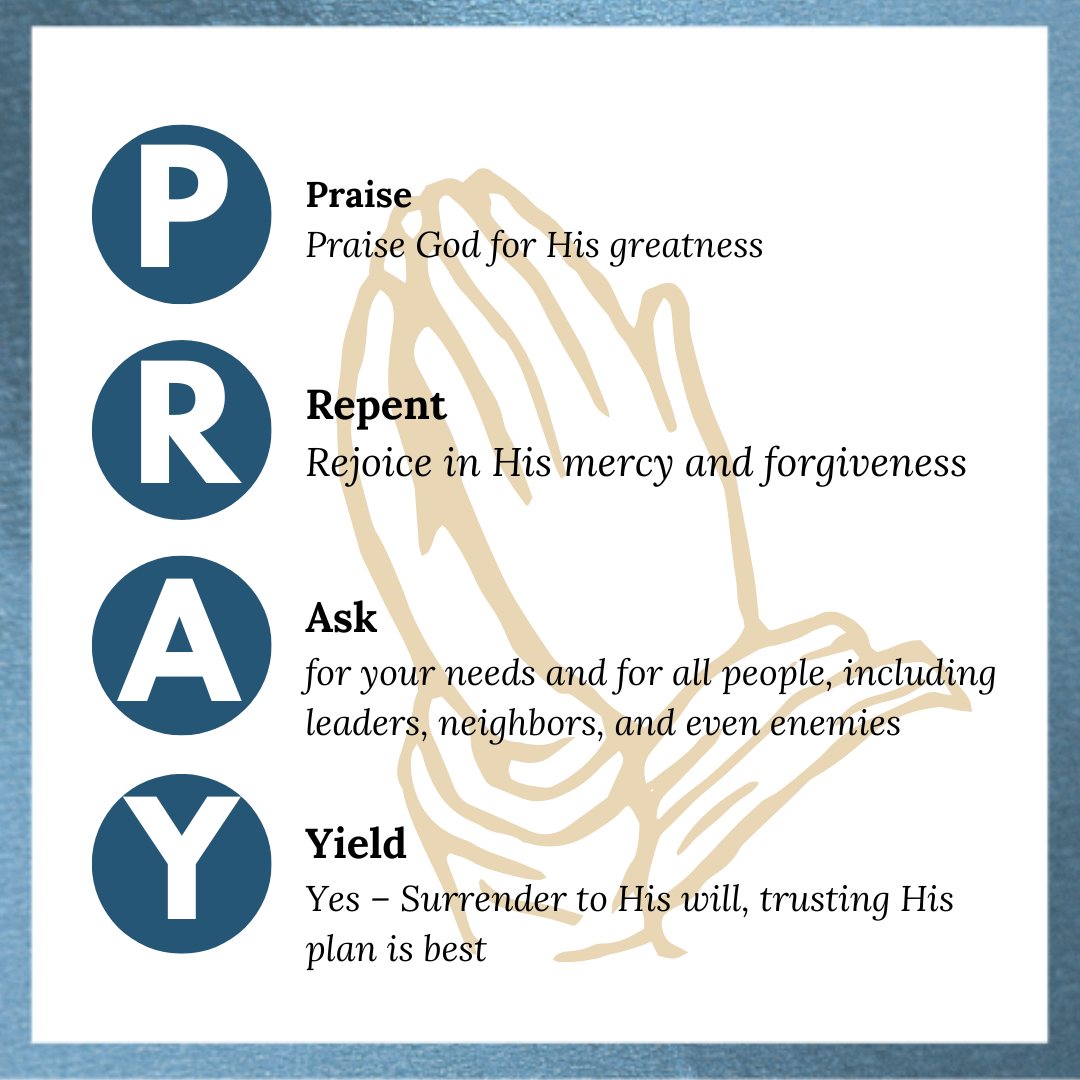
Pray Model
Another tool is the PRAY acronym:
P – Praise God for His greatness.
R – Repent - Rejoice in His mercy and forgiveness.
A – Ask for your needs and for all people, including leaders, neighbors, and even enemies.
Y – Yield - Surrender to His will, trusting His plan is best.
These models remind us that prayer is not just about asking God for stuff—it’s about aligning our hearts with His.

The Power of Prayer
Paul closes this section by reminding Timothy that we pray to the one true God through the one Mediator—Jesus Christ (1 Timothy 2:5–6). Our prayers have power not because of our words, but because of the God we pray to.
When we pray, we are addressing the Creator of heaven and earth, the One who raises up leaders and brings them down, the One who knows every hair on our heads. He alone has the power to answer prayers, save souls, and change hearts.
Prayer isn’t boring—it’s world-changing.
Reflection Questions
Who do you find it hardest to pray for? How can you bring them before God this week?
How might praying for leaders—whether political, spiritual, or workplace—shift your perspective on them?
Which part of the PRAY acronym do you need most today: Praise, Repent, Ask, or Yield?
Closing Prayer
Lord, thank You for the gift of prayer. Forgive me for the times I’ve thought it was boring or routine. Help me to pray for everyone—family, friends, strangers, leaders, and even those who oppose me. Teach me to praise, repent, ask, and yield, so my prayers align with Your will. May my prayers bring peace, open doors for the gospel, and reflect Your heart that all people would be saved. In Jesus’ name, Amen.